Tuesday, December 30, 2008

Home prices drop 18%


Home prices in October have fallen by 18% across the US. The S&P Case Shiller index, a scale where housing prices are carefully watched, has posted losses for 27 months in a row. In October, 14 out of 20 cities watched set new decline records. David Blitzer, Chairman of the Committee at S&P's, announced, "Home prices are back to their March 2004 levels." The region hit the worst is the Sunbelt, but prices are also falling almost everywhere else. Housing prices in Phoenix, Las Vegas, San Francisco, Miami, Los Angelos, and San Diego have all fell by around 30% annually for the past few years. This so-called "20-City Composite" is down by 23.4%, with three more cities falling by double-digits. The Pacific Northwest and Mid-Atlantic South is also subject to price reductions in the housing market.
According to Blitzer, factors turned negative starting November. He says, "Everyone felt relatively optimistic," until the Lehman Brothers collapse in September. Foreclosure still is a problem, as they tend to sell lower than average priced homes. An additional 85,000 foreclosures added new housing to the market whose price is falling.

Many plans have been made to help the bolster the economy as a whole, but only one housing bill has been passed. Bailouts have been given, targeting industries such as the auto industry, but nothing has been done to help Main Street keep their houses. The housing industry was the center of media attention for a while, then faded away. People are losing houses daily. Congress and the White House should focus on helping people solve their individual problems first, then do the economy. If people don't have to worry about their debts, then they will start spending, which stimulates the economy. To bring America out of recession, Americans must be able to spend. Current benefits are being saved in banks even though they will be losing money based on inflation and an almost-0% interest rate. This housing crisis must first be solved in order for any progress to continue.

http://money.cnn.com/2008/12/30/real_estate/October_Case_Shiller/index.htm?postversion=2008123011

Your paycheck bonus from Obama


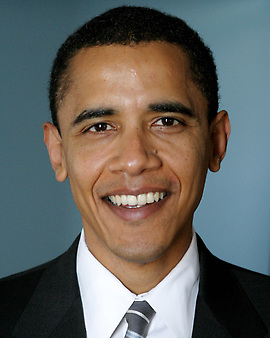
President-elect Obama promised many ways to stimulate the economy and helping Main Street on his campaign trail. With many families short on cash, Obama's plans could bring home some much-needed money. However, most of his plans will take time. The proposal that will get money quickly in the hands of the people that need it is his Make Work Pay Credit. This would basically be a payroll tax credit, $500 for individuals and $1,000 for couples. The money would be delivered by having employers reduce tax withholding in a person's paycheck. Full credit is limited to those making under $75,000 a year, and $150,000 for couples. Anyone making between $75,000-$85,000 a year (per person) would get partial credit. If a worker received a paycheck every two weeks, they would get $19.23 every paycheck, $38.46 for couples per pay period.

This is definitely the most helpful bill plan that can be put into effect. Obama and his team has made this plan clear and simple for lawmakers and American citizens alike to see. This plan is quick to put into effect and useful. Even though it won't be much, it might be the money that the people need to keep out of debt. However, even the best plans have faults. This money given out to American citizens are supposed to be spent, not saved in banks as many are doing with their unemployment relief checks. This relief money is supposed to be stimulating the economy by consumer spending, not consumer saving. Even though the interest rates in banks are close to 0%, people would still rather save up their money in case of troubles later than help the nation as a whole. Obviously, a person would think about themself first. Obama and his team realize that, but this plan will allow a person to cut down on their own debts. If they save enough, then they will spend, which will eventually stimulate the economy. Another problem is the cost. Obama's total stimulus package will cost over $800 billion (including education, energy, infrastruction, etc.). With a deficit that could go up to $1 trillion before this plan is implemented, it will be hard to decide whether the government can afford to use so much money to bolster the economy. Hopefully, Obama and his plans will bring America out of recession. America brought the world into recession- they must bring the world out. Your paycheck bonus from Obama is the first step for a better economy.

http://money.cnn.com/2008/12/30/news/economy/paycheck_stimulus/index.htm

Thursday, December 11, 2008

Some Madoff "victims" profit


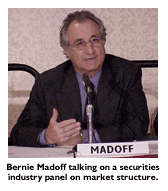
While many lose a large portion or even their life savings to Madoff's scandal, some actually have profited over the past few years. Over the past couple of years, many people have profited from depositing money, as Madoff's "investments" gave them 10-15% return each year. However, what they have "made" might be money stolen from other Madoff's clients. Now, they might need to give it back. One lawyer had a client who asked, "'I've taken out more money then I originally put in, but I still had $1 million left with Madoff. Should I file a $1 million claim?" The lawyer has told Yahoo! News that he was "hard-pressed to give advice in that situation."Jonathan Levitt, a New Jersey attorney who represents several former Madoff clients, said more than half of the victims who called his office looking for help have turned out to be people whose long-term profits exceeded their principal investment. One person called him had invested $1.8 million with Madoff about 10 years ago, then took out three million dollars profit as the years went by. However, that client still had around $4 million invested with Madoff. The client most likely would have to give up that claim of $4 million, as these investments were fake ones that were obviously not made.

Frankly, I am astounded by the audacity of Bernard Madoff. His Ponzi scheme has bankrupted hard-working people and destroyed charities. However, it is inevitable that some people profit from Madoff. He started his firm in 1960. That's plenty of time for investors to put in and take out money, right? The problem is, what happens to the money some investors gained? In 2005, when a hedge fund was revealed to be a Ponzi scheme, the winners of the situation were forced to give back the money they earned. However, this doesn't really seem fair, as these clients didn't know this was fake. If those clients didn't invest with Madoff, they might have had more capital to finance projects they wanted, such as constructing a new building in New York City. I am very split myself as to what to do with the winners, as they were also honest people who were scammed by this fraud.

As to what should be done to Bernard Madoff, he should probably just get the penalty as soon as possible. There is no way we can measure how many peoples' lives have been ruined. We cannot just count individual people, as countless charities that work for other peoples' well-being also have been scammed. His actions must affect the lives of tens of thousands around the world. Putting him to is the only sensible thing to do.


http://news.yahoo.com/s/ap/20090109/ap_on_bi_ge/madoff_false_profits

Tuesday, December 2, 2008

The future of airport security


Waiting long lines at security checkpoints in airports will soon become a thing of the past. Instead of having to go through the hassle of taking off your shoes, taking your laptops out of your bags, etc., airports will monitor, security officers will monitor a passenger's intentions and emotions. Several Israeli-based companies have developed systems that detect emotional strain. Using a combination of infra-red technologies, remote sensors, and flashing of subliminal images, it can detect a person's reaction to certain stimuli. For example, higher body temperatures, faster breathing, and a quickening heart rate can indicate a person is nervous or about to commit something he/she knows will have dire consequences. Another system can detect "stressed" voice patterns, which will prompt officers to question the "suspect" if he possesses these stressed voice patterns.

These new airport security features, to me, are astounding. These emotional and voice security checkpoints seems to be virtually unbeatable. I know that when I'm nervous, my hands become cold, I stammer, and my heart rate increases. A ist would definitely be nervous going through a security checkpoint, as he knows he will be committing an offence that might drag the world's most powerful nation to war. He will be worrying whether he will be able to properly carry out his plan, whether he is ready to die, whether he will be discovered by security officers. This type of airport security will definitely make air traveling safer than before.

http://www.cnn.com/2008/TECH/12/02/airport.security/index.html?iref=mpstoryview

Tories appeal to Canadians by radio while Green Party backs coalition


After the Liberals, the Bloc Quebecois, and the NDP formed a coalition that is designed to take over control of the government from the Conservatives, the Conservatives begin to fight back. They begin my rolling out radio appeals to the Canadian people that this coalition is an "un-Canadian" thing to do. "Last election, Stéphane Dion gave his word. He said his Liberals would never form a coalition with the NDP," the English-language Conservative radio spot says. "But now he's cut a deal with the NDP and he's working with separatists to make it happen. He even thinks he can take power without asking you, the voter." Other ads suggest that it is not right for a party to take control of the government without an election, even though Parliamentary rules allows it, ending with "This is Canada. Power must be earned, not taken." They also used a clip of Stephane Dion refusing to form a coalition, saying, "You cannot have a coalition with a party that has a platform that would be damaging for the economy, period."

I personally think this is just a waste of our taxpayer dollars. The election, by which the peoples' views were represented, costed about $300 million. Even though I support the Liberals, the majority of the people still like the Conservatives. Canada is a democratic nation, and as the Conservatives' messages say, "Power must be earned, not taken." The Conservatives also have some good points to nail the coalition on, such as Stephane Dion proclaiming that the NDP has a platform that damages Canada's economy. Another issue is that the Bloc Quebecois is one of the major parties. For years, they have wanted to separate Canada. Why should Quebec separatists run the country? Also, the Bloc is based almost solely in Quebec. This party does not think for Canada, it thinks for Quebec. We should not let these separatists ruin our great country. Therefore, I think the coalition should just give up and disband, as the third party, the NDP, is small enough that many people, myself included, don't care about.


http://www.theglobeandmail.com/servlet/story/RTGAM.20081202.wPOLcoalition1202/BNStory/politics/home